
Choosing the right gantry crane capacity is one of the most critical decisions in any lifting project. Whether you are operating in a steel structure workshop, precast concrete yard, shipyard, warehouse, or rail freight terminal, crane capacity directly affects safety, efficiency, equipment lifespan, and overall project cost. Yet, many buyers still assume that “bigger is better” or focus only on the rated tonnage printed on the nameplate. In reality, selecting the correct gantry crane capacity requires a much more comprehensive evaluation.
This article provides a practical, engineering-oriented guide to help you determine the most suitable gantry crane capacity for your project, avoiding both under-specification and unnecessary overspending.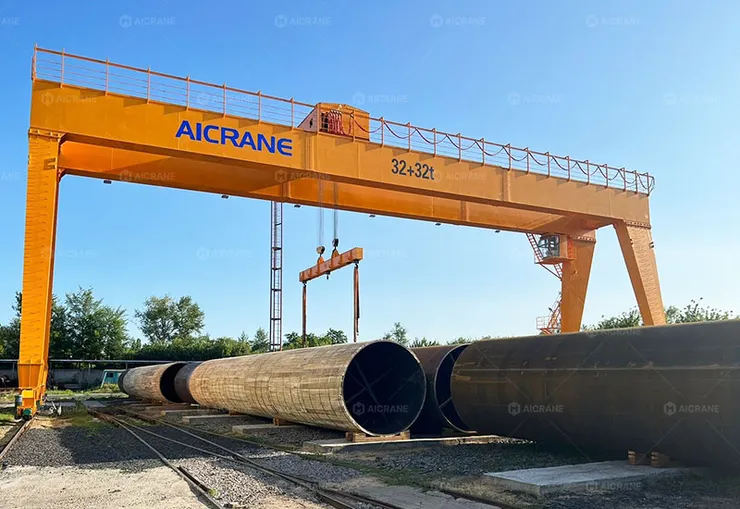
1. Understand What “Gantry Crane Capacity” Really Means
Gantry crane capacity refers to the maximum load the crane is designed to lift safely under specified conditions. This rating is not a general-purpose number - it is based on assumptions such as:
- Load being lifted vertically
- Even load distribution
- Standard lifting speed
- Specific span, lifting height, and duty class
Importantly, the rated capacity already includes a safety margin defined by design standards (such as FEM, ISO, or CMAA). However, this margin does not mean the crane can tolerate poor load control, side pulling, or excessive dynamic effects. Understanding this distinction is the first step in making a correct choice.
2. Start with the Maximum Load - But Don’t Stop There
The obvious starting point is identifying the heaviest load you need to lift. This includes:
- The weight of the product or material
- Lifting attachments (spreader beams, hooks, grabs, magnets, or slings)
- Any auxiliary devices attached to the load
For example, if a precast concrete beam weighs 38 tons and the lifting beam and rigging weigh 3 tons, the actual lifted load is already 41 tons. In this case, selecting a 40 ton gantry crane would be unsafe and non-compliant.
However, choosing capacity is not just about maximum weight. You must also consider how often that maximum load will be lifted and under what conditions, which leads to the next key factor.
3. Consider the Crane Duty Cycle and Working Class
Gantry cranes are designed for different duty classes, which reflect how intensively the crane will be used. Two projects lifting the same 30-ton load may require very different crane capacities depending on usage.
Key questions include:
- How many lifts per hour?
- How many operating hours per day?
- Is the crane used daily, occasionally, or seasonally?
- Are loads close to maximum capacity lifted frequently?
A gantry crane lifting 30 tons once per day in a maintenance yard can be designed very differently from one lifting 30 tons dozens of times per hour in a steel mill. In high-duty applications, engineers often recommend selecting a higher rated capacity to reduce structural stress, improve reliability, and extend service life.
4. Evaluate Dynamic Loads and Operational Conditions
Real-world lifting is never static. Dynamic forces can significantly increase the effective load on the crane structure and mechanisms. These include:
- Acceleration and deceleration during hoisting
- Trolley and crane travel movement
- Load swing caused by wind or sudden stops
- Emergency braking
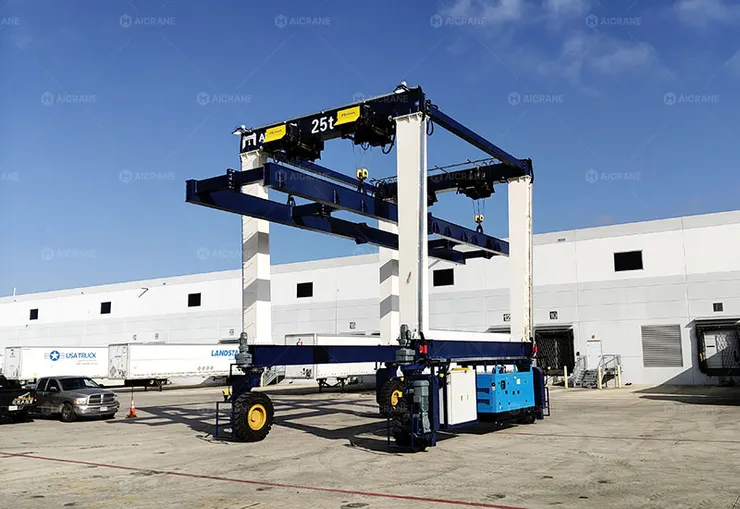
- Uneven ground conditions (especially for rubber tyred gantry cranes)
For outdoor gantry cranes, wind load is a major factor. Lifting long or bulky loads in windy conditions can create additional horizontal and vertical forces that must be considered in capacity selection.
If your project involves frequent traveling with suspended loads or high-speed operations, choosing a crane capacity with sufficient margin above the theoretical load is a smart and often necessary decision.
5. Account for Span, Lifting Height, and Structural Constraints
Gantry crane capacity is closely related to span and lifting height. As span increases, the bending moments on the main girder increase, which directly affects structural design.
For example:
- A 40-ton gantry crane with a 20-meter span is structurally very different from a 40-ton crane with a 35-meter span.
- Higher lifting heights require longer wire ropes and larger drums, influencing hoist selection and performance.
In some cases, a project with a long span and high lifting height may benefit from selecting a slightly higher capacity crane, not because the load is heavier, but because the structural configuration demands greater strength and stiffness.
6. Analyze the Type and Nature of the Load
Not all loads behave the same way during lifting. The nature of the load has a direct impact on capacity selection.
Consider whether your load is:
- Compact and rigid (steel coils, machinery)
- Long and flexible (steel beams, pipes)
- Unbalanced (asymmetrical equipment)
- Fragile or precision-critical (precast components, finished products)
Unbalanced or flexible loads can cause uneven force distribution on the hoist and gantry structure. In such cases, engineers may recommend a higher-rated crane or a dual-hoist gantry crane to ensure stability and safe load control.
7. Ground Conditions and Rail or Tyre Configuration
For rail-mounted gantry cranes, rail foundation quality and alignment affect load distribution. For rubber tyred gantry cranes, ground bearing capacity is even more critical.
Poor ground conditions can lead to:
- Uneven wheel loading
- Increased stress on structural components
- Reduced actual safe lifting capacity
If your site has limited ground bearing capacity or uneven surfaces, it may be necessary to select a crane with a more robust structural design, which often corresponds to a higher nominal capacity.
8. Future Expansion and Operational Flexibility
One common mistake in capacity selection is designing only for current needs. Many industrial projects evolve over time.
Ask yourself:
- Will load weights increase in the next 5–10 years?
- Will production volume rise?
- Might new product types be introduced?
If future expansion is likely, choosing a gantry crane capacity with reasonable growth allowance can be more cost-effective than replacing or heavily modifying the crane later. That said, this should be a calculated decision—not an excuse for excessive oversizing.
9. Balance Safety, Cost, and Efficiency
Oversizing a gantry crane can increase:
- Initial investment cost
- Steel structure weight
- Power consumption
- Foundation and installation costs
Undersizing, on the other hand, risks:
- Unsafe operation
- Frequent overload conditions
- Reduced crane lifespan
- Higher maintenance and downtime
The goal is to find the optimal capacity, not the maximum possible. A well-matched gantry crane improves lifting efficiency, reduces operator fatigue, and ensures long-term operational stability.
10. Work with Experienced Gantry Crane Engineers
Finally, the most reliable way to choose the right gantry crane capacity is to work closely with experienced crane engineers and manufacturers. Provide detailed information about:
- Load characteristics
- Working environment
- Duty cycle
- Span and lifting height
- Site and ground conditions
Professional engineers can perform load calculations, dynamic analysis, and structural verification to recommend the most suitable capacity and configuration for your project.
Conclusion
Choosing the right gantry crane capacity is not simply a matter of matching tonnage to load weight. It requires a holistic evaluation of operational conditions, duty cycle, load behavior, structural parameters, and future development plans. By taking a systematic approach and considering both technical and practical factors, you can select a gantry crane capacity that ensures safety, efficiency, and long-term value for your project.
A well-chosen gantry crane is not just a lifting tool—it is a strategic asset that supports reliable operations and sustainable growth.


