
Overhead cranes are essential tools in heavy industry, offering efficient lifting solutions for materials and equipment that are otherwise difficult or impossible to move manually. Among these, a 40-ton overhead crane represents a high-capacity lifting solution commonly used in steel mills, warehouses, shipyards, and manufacturing plants. While these cranes are engineered to handle significant weights, the challenge of lifting uneven loads—where weight is not uniformly distributed—presents unique risks and requires careful planning, specialized equipment, and strict adherence to safety protocols. Mismanagement of uneven loads can lead to crane instability, structural stress, operational inefficiencies, and even catastrophic accidents.
In this article, we explore the key considerations for safely handling uneven loads with 40 ton overhead cranes, including load assessment, proper rigging techniques, operator training, and equipment maintenance.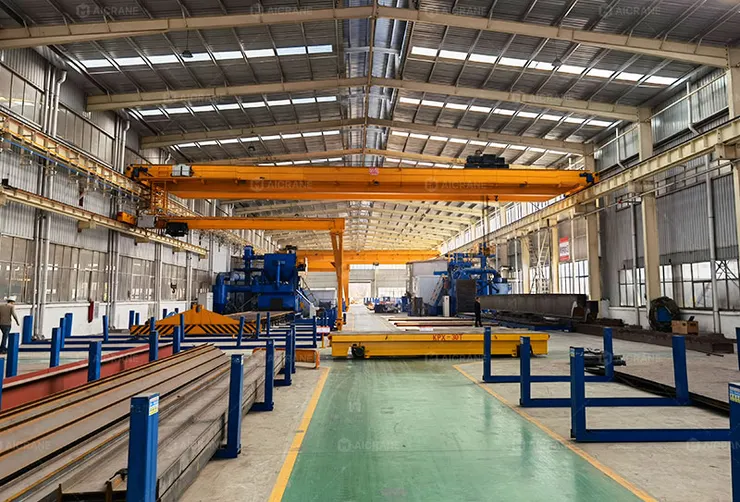
Understanding Uneven Loads
Uneven loads are characterized by a weight distribution that is asymmetrical relative to the crane hook or lifting point. Unlike balanced loads, where the center of gravity aligns with the lifting point, uneven loads shift the center of gravity away, creating moments and lateral forces that can destabilize the crane. Common examples include:
- Large machinery components: Where one end is heavier due to motors, gearboxes, or structural reinforcements.
- Irregularly shaped steel structures: Beams, plates, or assemblies with varying thickness or density.
- Bulk materials in containers or bins: Where material may shift during lifting.
The risks associated with lifting uneven loads are considerable. The crane can experience tilting, excessive wire rope tension, trolley misalignment, and even structural bending if corrective measures are not taken. Therefore, recognizing the nature of the load before lifting is a critical first step.
Pre-Lift Load Assessment
Before operating a 40-ton overhead crane with an uneven load, a comprehensive load assessment is essential. This process includes:
1. Determining the Weight Distribution
Understanding how the weight is distributed helps operators identify the load’s center of gravity. Methods include:
- Weighing individual components: If the load is assembled from multiple parts, weighing each piece can inform balance calculations.
- Using CAD models: For manufactured components, digital models can provide exact weight distribution data.
- Empirical estimation: For bulk materials, approximate distribution can be assessed based on container shape and fill level.
2. Identifying the Center of Gravity
The center of gravity must be estimated accurately to plan hook placement and lifting points. Misjudging this can cause swinging, rotation, or tipping of the load.
3. Assessing Load Stability
Operators must evaluate whether the load can maintain its shape during lifting. Materials that shift or deform under their own weight, such as stacks of plates or flexible components, require special rigging techniques or load-containment measures.
Rigging Techniques for Uneven Loads
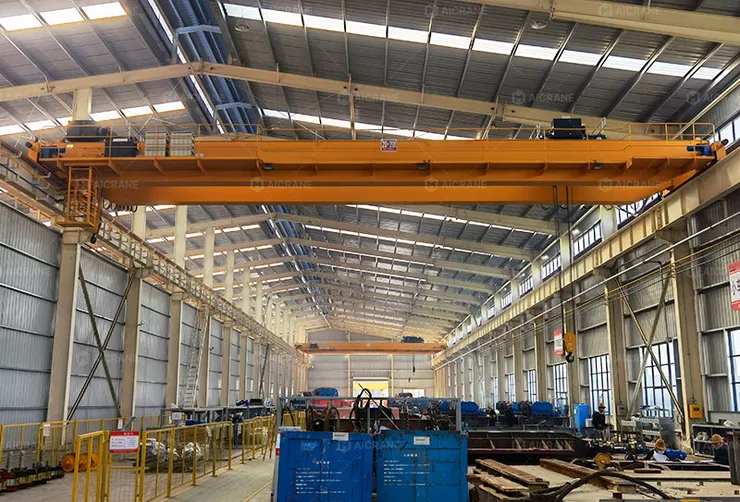
Proper rigging is crucial for lifting uneven loads safely. This includes the selection of slings, shackles, lifting beams, and spreader bars to distribute forces effectively.
1. Sling Arrangement
- Multi-leg slings: Using two or more slings can balance the load, minimizing tilt.
- Angle of lift: Slings should be positioned to ensure that the angle between the sling and the load does not exceed recommended limits, as excessive angles increase tension and reduce lifting efficiency.
2. Spreader Beams
Spreader beams are ideal for distributing the load evenly across multiple lifting points. They help prevent the load from bending or swinging excessively.
3. Adjustable Hooks
Cranes with adjustable hook blocks or multiple hook positions allow operators to better align the lifting points with the load’s center of gravity.
4. Tag Lines
For long or awkward loads, tag lines can control rotation and sway, helping to stabilize the load during vertical and horizontal movement.
Crane Operation Considerations
Even with proper rigging, safe operation requires awareness of crane dynamics when handling uneven loads.
1. Controlled Lifting Speed
Lifting too quickly can amplify swinging and instability. Operators should use slow and steady movements to keep the load stable.
2. Minimizing Crane Travel
Moving the crane while the load is not fully stable can be dangerous. When possible, vertical lifting should precede horizontal movement, reducing the risk of pendulum motion.
3. Monitoring Load Behavior
Operators should observe the load continuously during lifting. Any unexpected tilt, swing, or deformation should prompt an immediate stop and reassessment.
4. Load Positioning
Placing the load in the correct position for placement or assembly is as important as the lift itself. Ensuring that the load remains balanced during the lowering process prevents sudden shifts or impact forces.
Training and Safety Protocols
Operator competence is paramount for safe handling of uneven loads. Training should cover:
- Understanding load dynamics and center of gravity concepts.
- Proper rigging techniques for irregular loads.
- Recognizing crane limitations, including maximum capacity for specific hook positions.
- Emergency procedures for load instability or equipment failure.
Additionally, adherence to safety standards, such as OSHA guidelines or ISO 9927 for crane inspection and maintenance, ensures ongoing operational safety.
Equipment Maintenance and Inspection
Regular maintenance of the overhead travelling crane is essential to safely manage uneven loads:
- Wire ropes and slings: Check for fraying, stretching, or corrosion. Uneven loads place additional stress on these components.
- Hook blocks and sheaves: Ensure smooth rotation and proper lubrication.
- Crane structure: Inspect for signs of bending, stress cracks, or misalignment.
- Limit switches and overload protection: Verify that safety devices function correctly to prevent exceeding rated capacity.
Proactive inspection and maintenance reduce the likelihood of mechanical failure during challenging lifts.
Planning for Special Cases
Certain uneven loads may require additional planning, such as:
- Overhung or cantilevered loads: Use counterweights or multiple cranes to balance lifting forces.
- Dynamic loads: For moving or flowing materials, consider temporary containment or staged lifting.
- Complex assemblies: Use temporary bracing to maintain load integrity during movement.
Collaborating with engineers to analyze load stresses and plan lifts can prevent structural damage to both the crane and the load.
Conclusion
Handling uneven loads with a 40-ton overhead crane is a complex task that demands careful planning, proper rigging, operator skill, and strict adherence to safety protocols. The primary objective is to maintain stability, control, and crane integrity while minimizing risks to personnel and equipment. Key practices include conducting thorough load assessments, using appropriate rigging techniques like multi-leg slings or spreader beams, operating the crane with controlled movements, and ensuring that operators are well-trained in uneven load handling.
By implementing these measures, companies can maximize the efficiency and safety of their overhead crane operations while safeguarding high-value equipment and reducing the risk of workplace accidents. Managing uneven loads safely is not just about lifting capacity—it is about precision, planning, and the disciplined application of best practices in crane operation.


