Introduction
AI render architecture SketchUp workflows are increasingly used by architects to create fast and flexible visualizations during early design stages. By combining SketchUp’s intuitive modeling environment with AI-powered rendering, architects can transform simple architectural models into meaningful visual outputs without relying on complex traditional rendering setups.
Unlike conventional rendering pipelines that focus on final presentation images, an AI render architecture SketchUp workflow emphasizes speed, iteration, and visual communication throughout the design process. This approach enables architects to explore multiple design directions, test spatial ideas, and communicate concepts more effectively through visualization. As AI rendering becomes more accessible, SketchUp-based workflows are emerging as a practical and efficient solution for architectural visualization during concept and schematic design phases.What Is AI Render Architecture SketchUp Workflow?
An AI render architecture SketchUp workflow is a visualization process in which SketchUp models serve as the primary design input for AI-powered architectural rendering. Instead of manually configuring materials, lighting, and rendering parameters, architects rely on AI systems to interpret geometry, spatial relationships, and reference imagery to generate visualization results. In this workflow, SketchUp remains the core modeling tool, while AI rendering functions as a visualization layer that supports architectural decision-making rather than replacing established design methods.
Why Architects Use AI Rendering with SketchUp
Architects use AI rendering with SketchUp because the combination closely matches real-world architectural design workflows, particularly during early project stages. SketchUp enables fast massing and spatial exploration, while AI visualization delivers immediate visual feedback without heavy technical preparation. This workflow allows architects to communicate ideas more clearly, iterate design options efficiently, and reduce the time required for traditional rendering setup, especially when combined with AI-powered architectural visualization tools such as ReRender.
AI Render Architecture SketchUp Workflow Explained
An effective AI render architecture SketchUp workflow is built around clarity, iteration, and visualization intent. Rather than focusing solely on rendering accuracy, the workflow prioritizes how architectural ideas are translated into understandable visual representations. Each step supports design exploration, allowing architects to move fluidly between modeling, visual reference, and AI-generated visualization results as part of an integrated design process.
Preparing the SketchUp Model for AI Rendering
The workflow begins with preparing a clean and readable SketchUp model. Clear geometry, accurate proportions, and well-defined architectural elements are essential, as AI rendering systems rely heavily on spatial information. At this stage, excessive detail is unnecessary; the focus is on expressing architectural intent clearly so the AI can interpret the design effectively for visualization purposes.
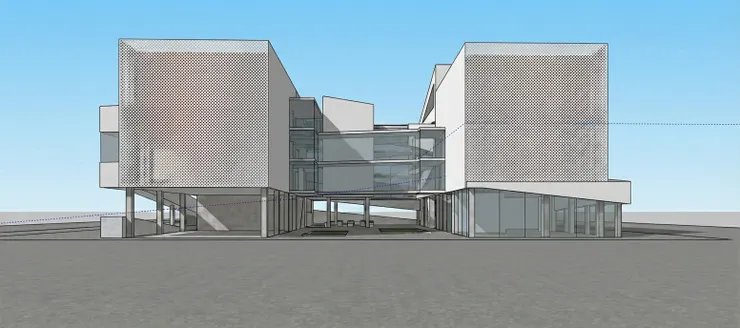
SketchUp architectural model prepared for AI render architecture visualization workflow

Using Style and Reference Images for AI Visualization
Style and reference images play a crucial role in guiding AI visualization results. These images help communicate material qualities, lighting conditions, and overall atmosphere that may not be fully defined in the SketchUp model. In an AI render architecture SketchUp workflow, references function as visual direction rather than exact templates, allowing AI-generated visualizations to remain aligned with the original architectural intent.
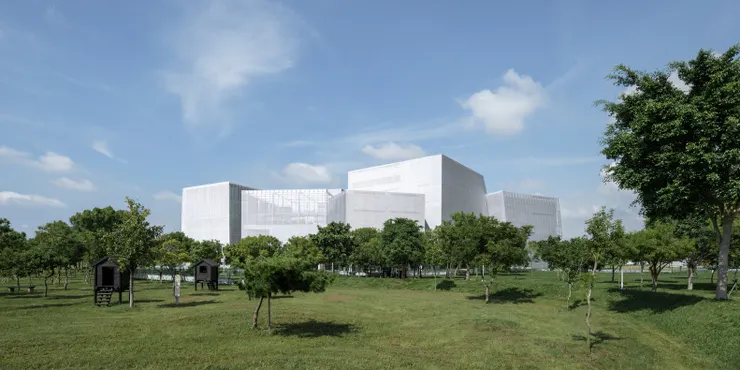
Reference image used to guide AI architectural visualization style and lighting

Generating AI Visualization Results for Architecture
Once the SketchUp model and reference inputs are combined, AI rendering generates visualization results that support design review, client communication, and concept development. These results are not intended to replace final renderings but to enable rapid iteration and visual exploration. Architects can adjust models or references and regenerate visualizations quickly, making AI visualization an active component of the architectural workflow rather than a final presentation step.

AI render architecture visualization generated from SketchUp model
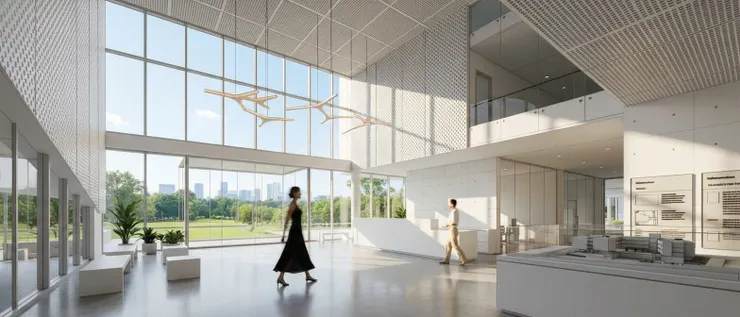
Architectural visualization created using AI render SketchUp workflow
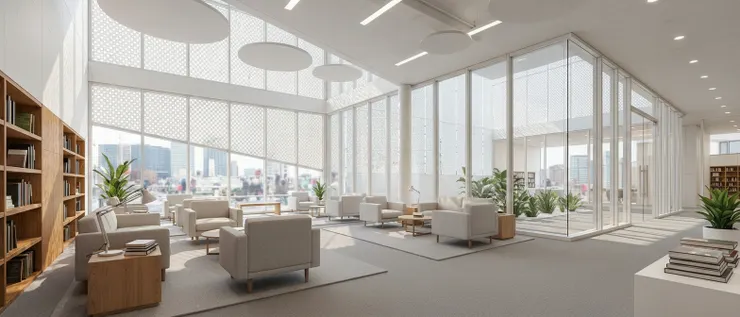
AI-powered architectural visualization showing design concept from SketchUp
AI Render Architecture SketchUp FAQ
Can SketchUp be used for AI architectural rendering?
Yes. SketchUp models are commonly used as base geometry for AI architectural visualization because they clearly define spatial structure, proportions, and design intent.
Is AI render suitable for early-stage architectural design?
AI rendering is especially effective during early design stages, where speed, iteration, and visual communication are more important than detailed technical accuracy.
What makes AI visualization different from traditional rendering?
Traditional rendering emphasizes physical accuracy and detailed setup, while AI visualization focuses on speed, interpretation, and design exploration within an architectural workflow.
Conclusion: AI Render Architecture SketchUp as a Visualization Workflow
AI render architecture SketchUp workflows reflect a practical shift in how architects approach visualization during the design process. Rather than replacing traditional rendering methods, AI visualization adds a flexible layer that supports early design thinking, rapid iteration, and clearer communication. By keeping SketchUp at the center of the workflow, architects can leverage AI-generated visualization as an effective tool for exploring ideas, refining concepts, and enhancing architectural decision-making.
AI render architecture SketchUp: https://rerenderai.com/