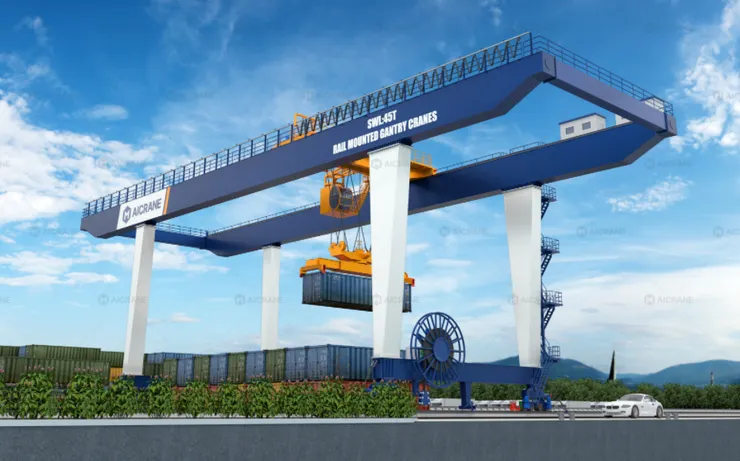
In the world of heavy lifting and industrial logistics, Rail Mounted Gantry (RMG) cranes stand out as critical equipment for handling massive loads in ports, container yards, shipyards, and large manufacturing facilities. Their complex design, heavy duty operations, and stringent safety requirements mean that quality cannot be compromised at any stage — from design and fabrication to assembly and final delivery.
To maintain exceptional performance, safety, and longevity, professional RMG crane manufacturers implement advanced Quality Control (QC) systems that cover every stage of production. This article delves into the core quality control frameworks and techniques used by reputable rail mounted gantry crane manufacturers, and explains how these systems ensure compliance with international standards, reduce risk, and deliver reliable cranes for demanding industrial applications.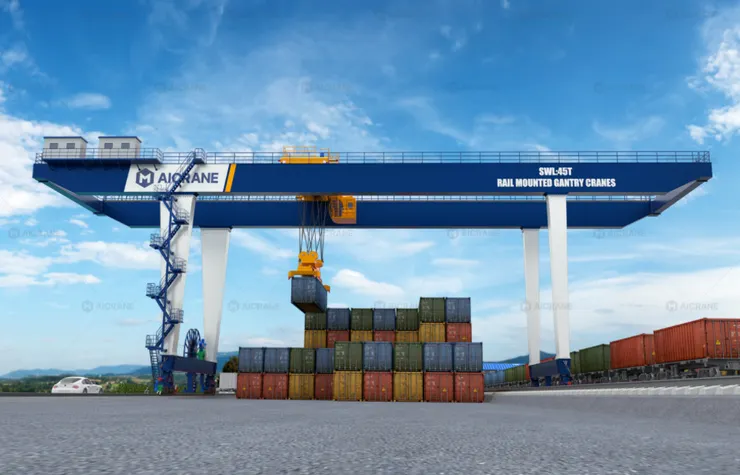
1. The Importance of Quality Control in RMG Crane Manufacturing
RMG cranes are not ordinary machines. They involve high-capacity lifting, dynamic loading conditions, extensive electrical and mechanical components, and integration with control systems. A failure in any component can lead to catastrophic outcomes — including safety incidents, operational losses, or structural failures.
Hence, quality control is not just a regulatory formality but a foundational pillar of RMG crane manufacturing. It ensures that:
- Structural components can withstand design loads without deformation
- Electrical and control systems operate reliably and safely
- Welding, machining, and assembly are executed with precision
- Long-term performance is durable even in harsh environments
- All regulatory certifications and client specifications are met
2. Quality Control Standards and Certifications
Professional RMG crane vendors base their QC systems on a combination of international standards, industry best practices, and customer-specific requirements. Some key standards include:
ISO 9001: Quality Management System
ISO 9001 certification is a foundational requirement for serious manufacturers. It ensures that the company operates under a documented Quality Management System (QMS) with continuous improvement, traceability, and procedural discipline. Through ISO 9001 compliance, manufacturers guarantee consistent product quality, controlled processes, and systematic documentation.
ISO 14001: Environmental Management
While not directly a quality standard, ISO 14001 ensures that environmental impacts are monitored and minimized — a growing concern in heavy manufacturing operations.
ISO 45001: Occupational Health and Safety
This standard integrates quality with worker safety. Given the heavy machinery and high-risk manufacturing environments of RMG cranes, ISO 45001 ensures that safety and quality intersect.
CMAA and FEM Standards
Cranes in ports and heavy industry often comply with Crane Manufacturers Association of America (CMAA) standards or Fédération Européenne de la Manutention (FEM) classifications, guiding structural design, duty cycles, service classes, and safety factors.
3. Quality Control Throughout the Production Lifecycle
Quality control for RMG cranes is comprehensive, spanning every phase of production. Below are the key stages where QC systems are rigorously applied:
3.1. Procurement Control
The quality assurance process begins even before production: with material acquisition.
- Supplier Qualification: Manufacturers strictly evaluate raw material suppliers for steel, electronics, and components based on quality history, certifications, and performance.
- Incoming Inspection: All materials — from structural steel to fasteners and electrical parts — undergo incoming inspection using gauges, tests, and certificate verification.
- Traceability: Each batch of material is documented with traceability records to ensure accountability and quality history.
3.2. Structural Fabrication Control
Fabrication — including cutting, welding, drilling, and forming — represents the heart of RMG crane preparation. Because these machines handle massive loads, structural integrity is vital.
Welding Quality Assurance
Welding is one of the most critical quality checkpoints:
- Certified Welding Procedures (WPS) are established for each welding operation with defined heat inputs, consumables, and sequences.
- Welder Qualifications: Every welder must be certified to execute specific welds for crane components.
- Non-Destructive Testing (NDT): After welding, components undergo NDT methods such as:
- Ultrasonic Testing (UT)
- Magnetic Particle Testing (MT)
- Dye Penetrant Inspection
- Radiographic Testing (RT) These methods detect internal and surface defects invisible to the naked eye.
Dimensional Control
Every component is measured for adherence to tight tolerances using:
- Coordinate Measuring Machines (CMM)
- Laser scanning
- Optical systems
This ensures that parts fit precisely during assembly and that the crane operates reliably.
3.3. Mechanical Assembly Control
During mechanical assembly, components like wheels, axles, motors, drives, and safety parts are installed.
Quality checks at this stage include:
- Alignment Verification: Proper alignment of rails, wheels, and travel components is critical for operational smoothness and safety.
- Torque and Fastening Inspection: Fasteners and critical joints are documented for torque compliance and locking integrity.
- Assembly Trace Cards: Each assembly step is recorded to ensure completeness and accountability.
3.4. Electrical and Control System Inspection
Modern RMG cranes depend heavily on electrical systems and automation:
- Panel Fabrication Standards: Electrical control panels are built under controlled environments with clear labeling and layout drawings.
- Function Testing: Each circuit is tested for continuity, grounding, insulation resistance and safety compliance.
- PLC and Software Validation: Programmable Logic Controllers (PLC), Human Machine Interface (HMI) systems, and safety interlocks are tested before installation.
- Control Loop Verification: Sensors, limit switches, drives, and safety circuits undergo calibration and validation to avoid failures in operation.
3.5. Load Testing and Performance Validation
Load testing is the final and one of the most important quality benchmarks before delivery:
- Rated Load Test: The crane is tested at full rated capacity plus safety margins. Measured parameters include acceleration, reaction time, and structural behavior.
- Full Functional Tests: Operations such as lifting, lowering, trolley travel, and hoist movement are tested across all speeds.
- Dynamic Load Verification: The crane is tested under simulated workload to confirm stability and performance under operational conditions.
- Safety Device Validation: Limit switches, overload protection, brakes, and alarms are checked.
4. Documentation and Traceability
Every quality control activity — from supplier certificates to load test results — is documented and linked to individual parts and assemblies. Traceability is ensured through:
- Serial numbers on major components
- Material certificates
- Non-conformance reports
- Inspection records
- Test and calibration reports
This documentation allows customers and auditors to verify the entire lifecycle of the crane and is essential for warranty support, maintenance planning, and future inspections.
5. Continuous Improvement and Feedback Loop
Professional RMG crane manufacturers operate under a principle of continuous improvement:
- Internal Audits: Regular quality audits ensure compliance and identify opportunities for improvement.
- Customer Feedback Integration: Feedback from operational use helps refine manufacturing processes and product design.
- Training Programs: Workers and technicians undergo continuous training on updated techniques, tools, and standards.
6. Benefits of Strong Quality Control Systems
Investing in rigorous quality control yields multiple long-term benefits:
Safety and Reliability
Crane operations become safer with reliable safety mechanisms and structural integrity.
Longevity and Lower Maintenance Costs
Crane components built under strict QC standards tend to last longer and require less unplanned service.
Regulatory Compliance
Adherence to global standards (ISO, CMAA, FEM) opens international market access and customer confidence.
Reduced Risk of Failure
Quality-controlled fabrication and testing dramatically reduce the risks of in-service failures.
Customer Reputation
Manufacturers with strong QC systems build trust and repeat business, especially among ports, logistics hubs, and industrial facilities.
7. Conclusion
In conclusion, professional RMG crane manufacturers rely on structured and multi-layered quality control systems to ensure every crane delivered meets the highest standards of performance, safety, and durability. From incoming materials and welding inspections to electrical system testing and final load validation, each step is governed by documented procedures, testing protocols, and rigorous oversight.
These quality control mechanisms are not optional — they form the backbone of reliable and safe crane operations. For clients investing in RMG container cranes, understanding these QC systems can help them choose a manufacturer that delivers performance without compromise.
With advances in automation, testing technologies, and quality management software, the future of RMG crane quality control promises even higher standards — turning quality from a checkpoint into a continuous philosophy embedded in every crane produced.