今天甄芸要翻譯的是一篇取自高雄市立凱旋醫院成人精神科主任,陳偉任醫師的部落格文章。
我想翻譯這篇文章,是因為它談到一群常被忽略的英雄——消防員。他們在火場裡拯救生命,也在壓力與恐懼中與自己搏鬥。翻譯的過程讓我看見,他們不只是勇敢的象徵,更是有血有淚、需要被理解的人。希望這篇文字,能讓更多人看見「支持消防員的心理健康」,也是守護社會的一部分。
以下是作者介紹:
陳偉任 醫師
- 凱旋醫院成人精神科 主任
- 國立高雄師範大學諮商心理與復健諮商研究所 助理教授
- 中華團體心理治療學會 理事
- 台灣阿德勒心理學會 理事
- 阿德勒生涯教練/親師諮詢師/親子生活教練 講師暨督導
- 國立高雄師範大學諮商心理與復健諮商研究所 博士
陳偉任 (2025)。 火場背後的心靈救援:我在小港消防員「心理急救」團體的第一手觀察。 陳偉任醫師心晴小站https://chenweijen.blogspot.com/2025/09/7-14-1.html?fbclid=IwY2xjawN9YHlleHRuA2FlbQIxMABicmlkETFybEZFdFZSR1UwTXE2VUwwc3J0YwZhcHBfaWQQMjIyMDM5MTc4ODIwMDg5MgABHpj8fFpwnpLc-zv78kG0QsJVlau5mYSJvpEehHt6-eSLYk9qvFydZwjzclXJ_aem_yRYU7Ld_zx7WXiyTVtye2g。
Beyond the Flames: A Frontline Glimpse into “Psychological First Aid” for Firefighters in Xiaogang
When the fire fades, the heart still trembles.
The night of July 14 is one I will never forget.
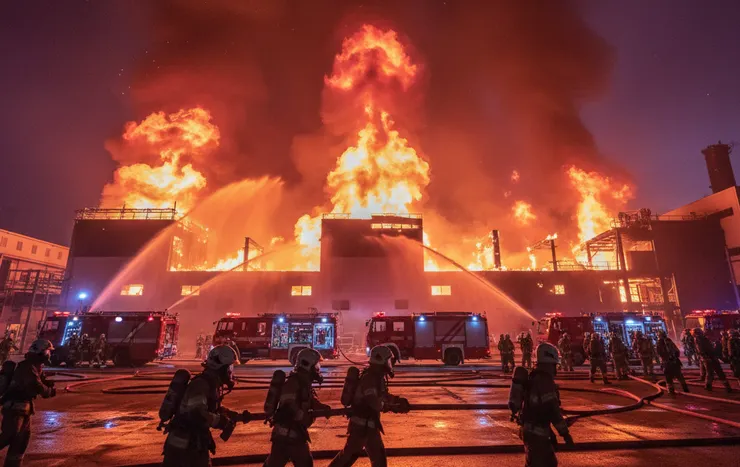
The sky over Xiaogang, Kaohsiung, burned crimson as the E-One Moli Energy Corp under TCC Group Holdings exploded and caught fire.
At that moment, firefighters rushed into the inferno without hesitation—driven by courage, duty, and an unspoken vow to protect the city.
Though the flames were eventually subdued, the shock that ignited within their hearts continued to smolder silently.
1. The Invisible Threats Within the Fire
This was no ordinary blaze.
When lithium batteries spiral into thermal runaway, they unleash violent explosions and toxic fumes—including hydrogen fluoride and benzene compounds.
Firefighters weren't just battling fire; they faced choking smoke, searing heat, and the concussive force of repeated blasts.
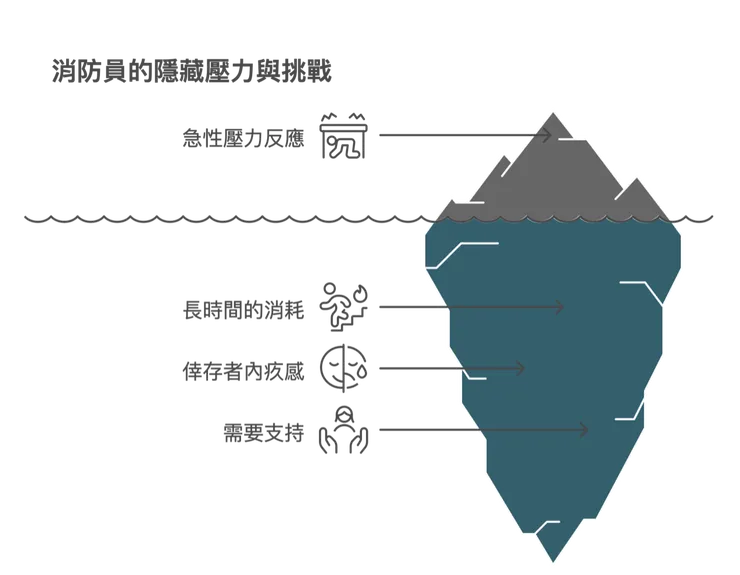
Such simultaneous assaults on the body and mind often trigger acute stress reactions: racing heartbeat, rapid breathing, sweaty palms, and waves of anxiety or panic that surge even after the danger has passed.
2. The Slow Burn of Exhaustion and Guilt
A total of 91 firefighters were mobilized that night, enduring 26 hours of unrelenting operation— cooling the site, monitoring chemical reactions, deploying rescue robots.
The physical toll was crushing: sleep deprivation, exhaustion, emotional depletion. But what lingered even heavier was the survivor's guilt— that haunting question:
“Why was I the one who walked away, while my brothers were hurt?”
Left unresolved, that guilt can quietly take root— growing into insomnia, flashbacks, or even chronic PTSD.
3. Beyond the Fireline, They Too Need to Be Seen
Inside the fireground, they embody professionalism, bravery, and flawless teamwork. But once they step out, they need something just as vital—understanding, and a safe space to feel human again.
Sometimes, all it takes is someone to say:
👉 “The fear, exhaustion, and sleeplessness you're feeling right now—these are normal.”
And in that moment, a heart wound tighter than any hose finally exhales— just a little— and begins to heal.
Systematic Safeguards: Kaohsiung's Forward-Thinking Approach
What deserves special attention is that as early as May 2025, the Kaohsiung City Fire Department launched a pioneering collaboration with Kaohsiung Municipal Kai-Syuan Psychiatric Hospital and National University of Kaohsiung to establish an on-site psychological support system for firefighters.
This marks a significant shift — psychological care for first responders is no longer a temporary comfort offered after crises, but a structured, professional, and enduring form of protection.
Thanks to this initiative, I had the privilege of entering the front line with our mental health team to lead a one-time Psychological First Aid (PFA) group session for nine firefighters directly affected by the explosion.
This was not therapy. It was a space of support — a breathing room where they could gently revisit their experiences, reorganize their emotions, and reconnect with available resources.

I share this story not merely as a record of clinical practice, but as a testament to organizational responsibility, human compassion, and the quiet strength of teamwork.
The Faces Behind the Uniform: Courage, Vulnerability, and Endurance
Among the nine firefighters, eight were men and one was a woman, most between their twenties and forties. One team leader mentioned during the session:
“Three were injured in the first blast, and two more afterward.”
His words revealed not only the chaos and pain of that night, but also the reality that not everyone wounded could attend this group.
1. The Imprint of a High-Pressure Profession
For firefighters, danger is routine. After every mission, there's always a debriefing, but that often turns into self-blame rather than reflection. With manpower stretched thin, many have no choice but to push through exhaustion, wearing stoicism as armor.
2. The Body and Mind in Real Time
At the moment of the explosion, some said they “froze,” some “panicked,” and others simply “went blank.”These aren't signs of weakness—they are the brain's amygdala doing its job, triggering survival mechanisms when faced with extreme threat.
Yet once away from the fireground, many reported flashbacks, insomnia, pounding heartbeats, mood swings, and even strong reactions when hearing alarm sirens. If unaddressed, such acute stress responses can evolve into PTSD over time.
3. The Invisible Weight of Family and Society
“I didn't want my family to know I was hurt. They'd just worry.”That sentiment echoed among nearly everyone in the group. They are trained to protect others—and in that mission, often forget that they too need protection.
The Group Journey: 120 Minutes of Heart Work
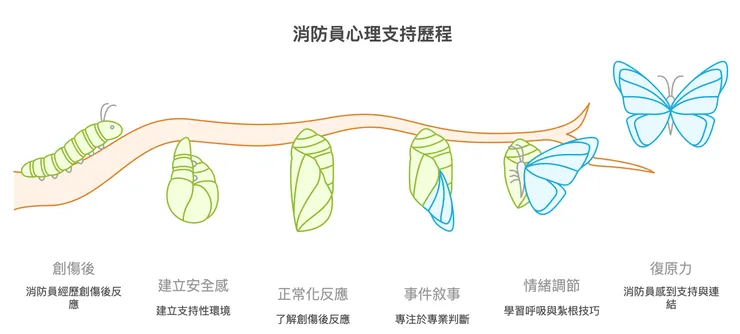
We designed a structured two-hour session, guiding the firefighters through four core stages of psychological stabilization and reconnection.
1. Building Safety and Trust
I began by saying:“This isn't a debriefing—it's a circle of support.”When one firefighter nodded, I could feel the air in the room loosen, ever so slightly.
2. Normalizing Reactions
Through slides and handouts, I explained the common post-trauma responses: sleeplessness, palpitations, emotional turbulence. Then I told them, “These aren't signs of weakness. They're signs your brain is protecting you.” Several eyes glistened with unspoken tears.
3. Mapping the Incident Narrative
Using a timeline on the whiteboard, we revisited the sequence of events—not diving into painful details, but focusing on professional judgment and teamwork. When they spoke of shielding one another after the blast, or ensuring no one was left behind, a spark of pride reemerged in the ashes of fear.
4. Emotional Regulation and Resource Mapping
We practiced the 4-7-8 breathing technique and the 5-4-3-2-1 grounding method. Someone chuckled, saying, “Didn't know breathing could be a weapon.” And in that laughter, I heard resilience returning.
Finally, we drew a support network map—from family and friends, to colleagues, to professional hotlines and mental health services. I ended with one message: “You are not alone.”
My Reflections and Observations
These firefighters are a group defined by high professionalism, high dedication, and high risk. They charge into infernos without hesitation — yet deep inside, they too need a space to breathe.
During the session, I witnessed subtle but powerful transformations: from silence to speech, from passivity to participation, from doubt to willingness—even joining in the breathing exercises. These quiet shifts are precisely the essence of Psychological First Aid.
More importantly, they began to understand: trauma responses are not an illness, but the body's ancient survival mechanism. When we equip them with knowledge, coping tools, and access to resources, they regain balance faster — ready once again to shoulder the weight of protecting their city.
Why Share This Story?
Because behind every headline and every number in a disaster report, there are the hearts of those who stand in the flames. Because mental health is not a luxury — it is part of occupational safety. Because every fire reminds us: even heroes need care. If you have a friend who is a firefighter, or someone who has lived through a major trauma, please tell them:“Your reactions are normal. I'm here with you.”That simple sentence might carry more healing power than we could ever imagine.

Conclusion: Let the Guardians Be Guarded
The explosion and fire at the E-One Moli Energy Corp brought a storm of toxic smoke, secondary blasts, and prolonged rescue missions — a perfect storm that tested both the physical endurance and mental resilience of firefighters.
The Kaohsiung City Fire Department understands that this is not an isolated incident, but a wake-up call for the entire firefighting system.
That's why we are implementing a comprehensive stress screening mechanism, deploying on-site counseling and acute psychological intervention, and planning for long-term follow-up and sustained support.
Most crucially, we aim to build a stigma-free culture of help-seeking — a world where talking about mental health becomes part of a firefighter's normal routine, not the last resort after breaking down.

Only then can we truly ease acute stress, prevent PTSD,
and ensure that those who protect the city are also protected by the city itself.
🔥 Fire can destroy buildings — but it must never destroy the hearts of those who protect us.
The Kaohsiung City Fire Department pledges this: To the heroes who guard our city — we will guard you, too.
#Employee Assistance Program(EAP)