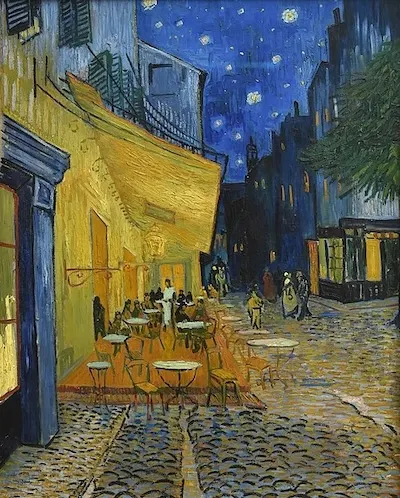
梵谷畫作
anyone lived in a pretty how town
任何人住在一個很不知如何的城裡
(with up so floating many bells down)
(上方飄浮著許多向下的鐘鈴)
spring summer autumn winter
春季 夏季 秋季 冬季
he sang his didn't he danced his did.
他唱著他的不曾,舞著他的曾經。
Women and men (both little and small)
女人和男人 (既渺又小)
cared for anyone not at all
毫不關心任何人
they sowed their isn't they reaped their same
他們種下他們的不曾,收穫他們的不變
sun moon stars rain
太陽 月亮 星辰 雨滴
children guessed (but only a few
孩子們料想 (但只有少數
and down they forgot as up they grew
而且他們會忘記,一路長大後
autumn winter spring summer)
秋季 冬季 春季 夏季
that noone loved him more by more
沒有人愛著他,更多倚靠著更多
when by now and tree by leaf
何時倚靠著此刻,大樹倚靠著樹葉
she laughed his joy she cried his grief
她笑著他的喜悅,她哭著他的傷悲
bird by snow and stir by still
鳥倚靠著雪,動倚靠著靜
anyone's any was all to her
任何人的任何,於她是一切
someones married their everyones
許多某人和他們的每個人結婚了
laughed their cryings and did their dance
笑著他們的哭泣,忙著他們的舞蹈
(sleep wake hope and then) they
睡著 醒著 期望著,而後) 他們
said their nevers they slept their dream
說著他們的不曾,睡著他們的夢境
stars rain sun moon
星辰 雨滴 太陽 月亮
(and only the snow can begin to explain
(唯有雪能解釋
how children are apt to forget to remember
孩子如何逐漸忘了去記得
with up so floating many bells down)
上方飄浮著許多向下的鐘鈴)
one day anyone died i guess
有一天,我猜,任何人死了
(and noone stooped to kiss his face)
(沒有人俯身親吻他的臉)
busy folk buried them side by side
忙碌的居民將他們並排埋葬
little by little and was by was
渺小倚靠著渺小,過去倚靠著過去
all by all and deep by deep
所有倚靠著所有,深邃倚靠著深邃
and more by more they dream their sleep
更多倚靠著更多,他們夢著他們的睡眠
noone and anyone earth by april
沒有人和任何人,地球倚靠著四月
wish by spirit and if by yes.
願望倚靠著靈魂,如果倚靠著如是
Women and men (both dong and ding)
女人和男人 (既咚又叮)
summer autumn winter spring
夏季 秋季 冬季 春季
reaped their sowing and went their came
收穫他們的播種,離去他們的來臨
sun moon stars rain
太陽 月亮 星辰 雨滴
(mary may 譯)
這首詩的故事是這樣的:
在一個叫做 pretty how town 的城鎮裡,住著一個叫做 anyone (任何人) 的男人。
他快樂的活著,無論經歷過什麼,不曾經歷過什麼,他都唱著、舞著、歡慶他的生命。
城裡庸碌庸碌、生活一成不變的女人和男人,也就是詩裡的 someones 和 everyones,
不曾關注過 anyone。(someone 意謂有點成就的人,everyone 意謂和大家一樣平凡的人。)
但天真的孩子知道,有一個叫做 noone (沒有人或小人物之意) 的女人,深愛著 anyone。
雖然孩子長大變成 someone 或 everyone 以後,會忘了有這樣的愛存在。
有一天,anyone 死了,城裡的居民把他和 noone 並排葬在一起。春夏秋冬,四季循環;
太陽、月亮、星辰、雨滴,一如往昔。城裡的女人和男人依舊種下他們的不曾,收穫他們的不變,
笑著他們的哭泣,任夢沉睡。
這是 anyone 和 noone 的愛的故事。可以把它們當做人名來讀詩,也可以照字意來讀。
noone 愛著 anyone:沒有人愛著任何人… (這樣譯出來真讓人震慄…)
但詩裡,「沒有人」對「任何人」的愛是這麼的美:
「她笑著他的喜悅,她哭著他的傷悲 / 鳥倚靠著雪,動倚靠著靜 /任何人的任何,對她是一切」
(she laughed his joy she cried his grief / bird by snow and stir by still /
anyone's any was all to her)
當他們並肩入土,夢著他們的睡眠 (其他居民則是相反︰「睡著他們的夢境」):
「渺小倚靠著渺小,過去倚靠著過去 / 所有倚靠著所有,深邃倚靠著深邃」
(little by little and was by was / all by all and deep by deep)
pretty how town 是一個人們不知道 how 或總問著 how 的城鎮,也許是一個不知道 how to love 的地方吧。pretty 可解讀為「美麗的」,也可當副詞「非常」,就是人們很會問 how 的地方。how 又和 town 押韻,也成了一個很有意思、很好聽的城鎮名。
要是有個 pretty now town 該多好,每個人都悅於當下的地方。
而詩裡,在這個 pretty how town,noone 和 anyone 的愛是永恆的四月,永恆的春天,永恆的 yes。
「沒有人和任何人,地球倚靠著四月 /願望倚靠著靈魂,如果倚靠著如是」
(noone and anyone earth by april / wish by spirit and if by yes.)
我們都知道,康明斯的「我」i 一直是小寫的,但他在詩中也會運用大小寫來傳達字外之意。
這首詩裡,只有一個字是大寫的,你發現是哪個字了嗎?
嗯,是 Women。詩人彷彿說著,透過女性對他的愛,透過他對女性的愛,他終能成就一種肯定,回歸一種永恆。
不禁讓人想起歌德在《浮士德》第一卷卷尾,知名的頌揚永恆女性、永恆母性的詩句︰
Alles Vergängliche
ist nur ein Gleichnis;
一切無常
僅是一種譬喻;
das Unzulängliche,
hier wird’s Ereignis;
那無法觸及的,
於此展現為事實;
das Unbeschreibliche,
hier ists getan;
那無法描述的,
於此體現為行動;
das Ewig-Weibliche
zieht uns hinan.
那永恆的女性
引領我們前進。
或是,赫塞《稍縱即逝》(Vergänglichkeit) 裡說的︰
「我願再度凝望母親的雙眸,/ 她的目光即是我的星辰。/ 萬物都將隨風而逝,/ 萬物消逝,都欣然消逝。/ 唯有那永恆的母親,/ 我們的所來處,永遠駐足。/ 她嬉戲般的舉起手指,/ 在飛揚的風中寫入我們的名字。」
(Ihre Augen will ich wiedersehn, / Ihr Blick ist mein Stern, / Alles andre mag gehn und verwehn, Alles stirbt, alles stirbt gern. / Nur die ewige Mutter bleibt, / Von der wir kamen, Ihr spielender Finger schreibt / In die flüchtige Luft unsre Namen. )
你也喜歡這個「沒有人」和「任何人」的愛的故事,在這個沒有人愛任何人的城市嗎?
我是否是那個 noone?你是否是那個 anyone?
當你逝去入土,愛著你的沒有人和你並肩而臥。
你是否體悟了那深愛你的沒有人,其實一直在你的靈魂裡?